

Get an Ayurveda College and Career Overview
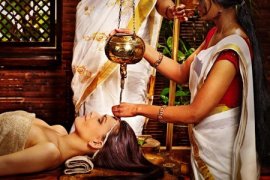 Ayurveda, or “the science of life” in Sanskrit, is a holistic system of medicine that originated in India thousands of years ago. Its basic approach is to balance the mind, body and spirit through traditional techniques and treatments that promote health and prevent illness.
Ayurvedic practitioners view people as having a unique constitution (prakriti) and combination of life forces, known as doshas, which determine their physical and psychological health and vulnerabilities. Healthful balance is maintained using a customized regimen of cleansing practices, meditation or yoga, herbal medicines, vitamins and/or mineral treatments.
In India, where the tradition originated, it’s not uncommon to find an Ayurveda college or hospital in most large cities. Ayurveda school is a little harder to come by in the United States, but as time passes, more Ayurveda training programs are cropping up at state-approved educational institutions.
Career Overview
With 40 percent of adults using complementary or alternative medicine in 2010, there’s a clear market for practitioners of Ayurveda and other natural healing practices. Accordingly, a number of career opportunities are available to graduates of Ayurveda college. Some learn Ayurvedic principles as part of a pre-medical program; in that context, you might choose to work as a doctor in a clinic or private practice. Others choose to teach general Ayurvedic concepts at an Ayurveda school or wellness center, or specialize in administering therapies such as massage, yoga or panchakarma.
What You’ll Study in Ayurveda School
In a typical Ayurveda college, you can expect to learn the basic concepts and philosophies of Ayurvedic tradition, as well as clinical practices and traditional treatments. Topics covered in your Ayurveda training may include:
- Transcendental meditation techniques
- The mind-body connection
- Ayurvedic nutrition and the six tastes
- Client observation and evaluation
- Dietary and herbal treatment plans
Average Length of Study
If you choose to pursue a pre-med program that incorporates Ayurvedic training, then you can expect to spend about four years completing your bachelor’s degree. In contrast, diploma or certificate programs at an Ayurveda college take one to two years to complete. Shorter programs may require as few as 500 hours, while comprehensive certificates usually include 1000 to 1500 hours.
Average Tuition
Most schools offering Ayurveda training programs are private institutions or learning centers, and as a result, tuition for a four-year degree can really add up. However, if the Ayurveda college is appropriately accredited, you may be eligible for federal financial aid. Diploma or certificate programs generally cost about $5, 000 for a 500-hour program.
Ayurveda Certification
Currently, the United States does not specify a certification requirement for Ayurvedic practitioners, though more and more programs are being offered through state-approved institutions. Membership in a professional group such as the National Ayurvedic Medical Association can help you establish credibility in the field and demonstrate your commitment to competent and ethical Ayurvedic healing.
RELATED VIDEO


Share this Post
latest post
-
 Warts treatment in Ayurveda October 3, 2026
 -
 Acne treatment in Ayurveda September 13, 2026
 -
 Gallstones Ayurveda treatment August 24, 2026
 -
 Ayurvedic Pregnancy August 4, 2026
 -
 Treatment of Ayurveda July 15, 2026
 -
 Weight loss Remedies in Ayurveda June 25, 2026
 -
 Ayurveda Migraine June 5, 2026
 -
 Guggulu Ayurveda May 16, 2026
 -
 Ayurveda in Diabetes April 26, 2026